The perinatal period is a deeply meaningful time, but it can also come with emotional and physical demands. The stresses, emotional ups and downs, and the many adjustments can take a toll on new parents.
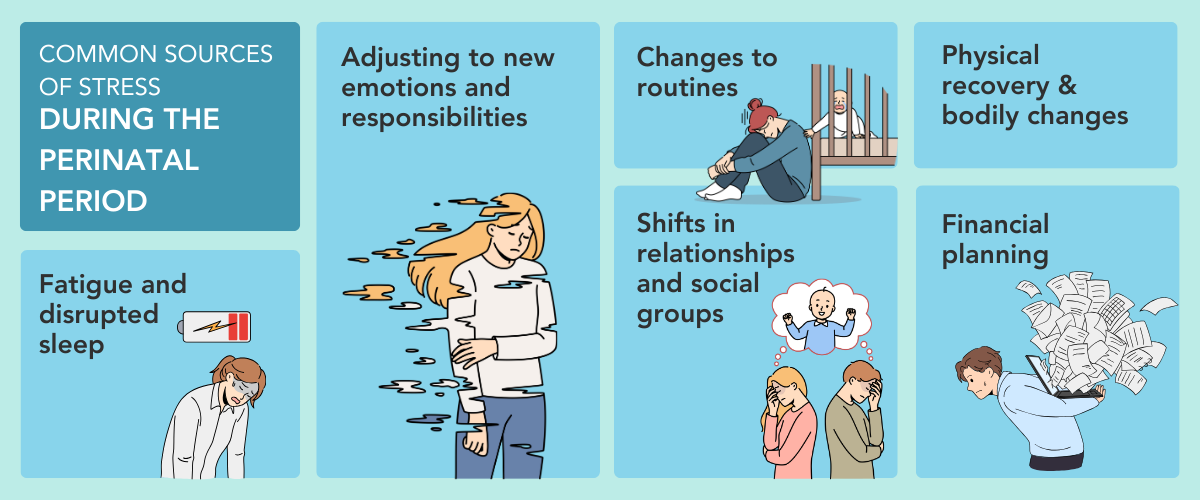
Common sources of stress include:
Fatigue and disrupted sleep - Newborns require frequent feeding, even throughout the night. Infants usually sleep in short stretches, requiring parents to adjust their sleep schedules around their baby's needs. This disruption to sleep can physically exhaust parents, affecting their energy levels and concentration. It can also feel harder to cope with stress or regulate emotions. Irritability and tearfulness are natural responses to ongoing tiredness.
Emotional adjustments to increased responsibility - Many parents find themselves worrying more, questioning their decisions and feeling unsure about whether they're doing enough. Mood swings, anxiety and self-doubt are common in parents who are adjusting to their new role. In some cases, parents may struggle to connect with their baby which can bring feelings of guilt or doubt.
Changes to routines and daily life - Time spent previously on rest, work and social activities may be diverted to the baby's needs. Sometimes, self-care even becomes secondary to care for the baby. Losing such familiar routines can feel disorienting. Some parents grieve aspects of their previous independence while learning to adapt to a new rhythm of life.
Changes in relationships and support - Relationships between partners may change as the couple adjusts to new responsibilities and lesser time with each other or their social networks. Having different expectations in caregiving can sometimes lead to tension, especially when both parties are already exhausted. As a result, it is common for new parents to feel isolated or disconnected during this period.
Physical recovery and bodily changes - Healing after pregnancy and birth may involve some discomfort and even challenges with feeding the baby. These can affect confidence and self-image in the mum. On the other hand, dads may not experience the same changes but still feel the physical effects of fatigue and caregiving demands.
Balancing work and family life - With the increase in household expenses for baby care items, healthcare and education, parents will need to plan and budget their finances accordingly. Some parents may also want to seek out flexible work arrangements to be present during those crucial growing-up years.
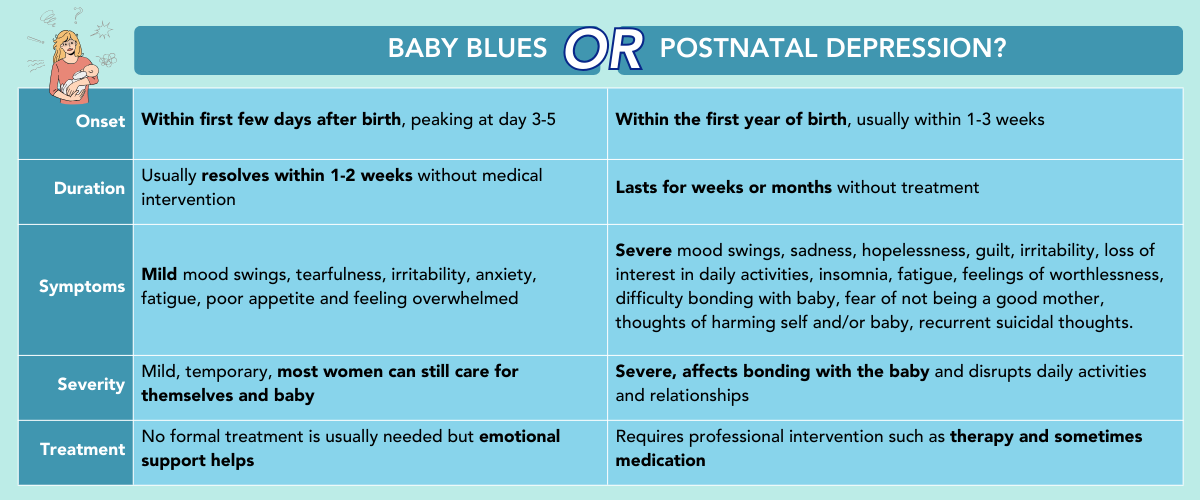
According to Dr Gillian Lim, senior consultant at the department of mood and anxiety in IMH, baby (postnatal) blues affects up to three-quarters of new mothers, with symptoms usually resolving on their own within a month. However, for some women, symptoms persist and impact their wellbeing and ability to bond with their infant.
A more severe and longer-lasting condition, called postnatal depression, occurs in around 10 to 15 per cent of new mothers. Unlike baby blues, postnatal depression involves depressive symptoms that last more than two weeks, occur nearly all the time, and do not resolve themselves naturally.
Risk factors include previous episodes of major depression, a family history of depression, and depression during pregnancy. Hormonal changes and low social support can also increase risk.
If symptoms affect your ability to care for yourself or your baby, it is important to seek professional advice.
You don't need to wait to ask for support. Small, early steps can make a meaningful difference.
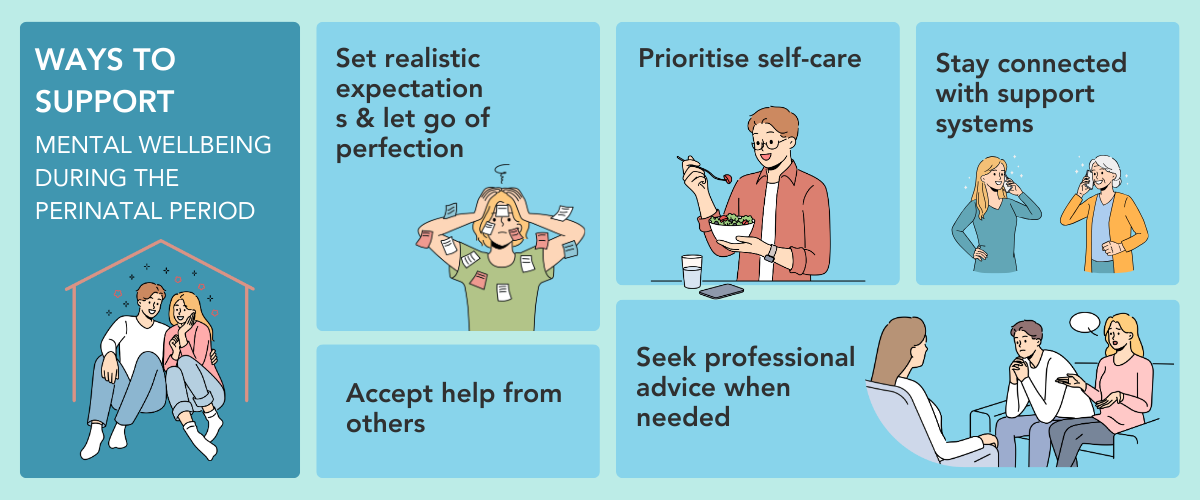
Set realistic expectations and let go of perfection
The transition into parenthood comes with a steep learning curve. Many parents feel pressure to "get it right", or meet idealised expectations of what parenting should be. Openly discuss emotional and physical challenges with your partner to know your limits and where you may need more help. Accept help with baby care, household tasks or meals to ease daily pressure, prevent burnout and give you time for rest.
Prenatal classes and workshops can also help parents learn practical skills such as swaddling, diaper changing and breastfeeding. Demonstrations can reduce anxiety and build confidence. Financial planning services may also be useful in managing new and future expenses.
Remember, parenting isn't about perfection. Feelings of uncertainty and learning as you go are part of the journey.
Stay connected with emotional support
It's common for new parents to have less social contact with peers and loved ones, especially in the baby's earlier months. Staying connected with people who can listen without judgement and offer reassurance will help reduce feelings of isolation and make challenges feel more manageable.
If emotional distress becomes too persistent, overwhelming and impacts your daily function, seek professional support early. Reaching out for help is a responsible and proactive step towards maintaining mental wellbeing throughout your parenting journey.
For more resources, visit:
Health Hub Parent Hub
Singapore Children's Society Parenting Resources
Families for Life Parenting programmes
Fatherhood Survival 101 (Guide compiled by Behind The Crib)
